Well Pump Replacement in Chesapeake, VA
Well pump replacement for Chesapeake, VA homes: when to replace, how a new pump is sized for your well depth and water, and what the swap involves.
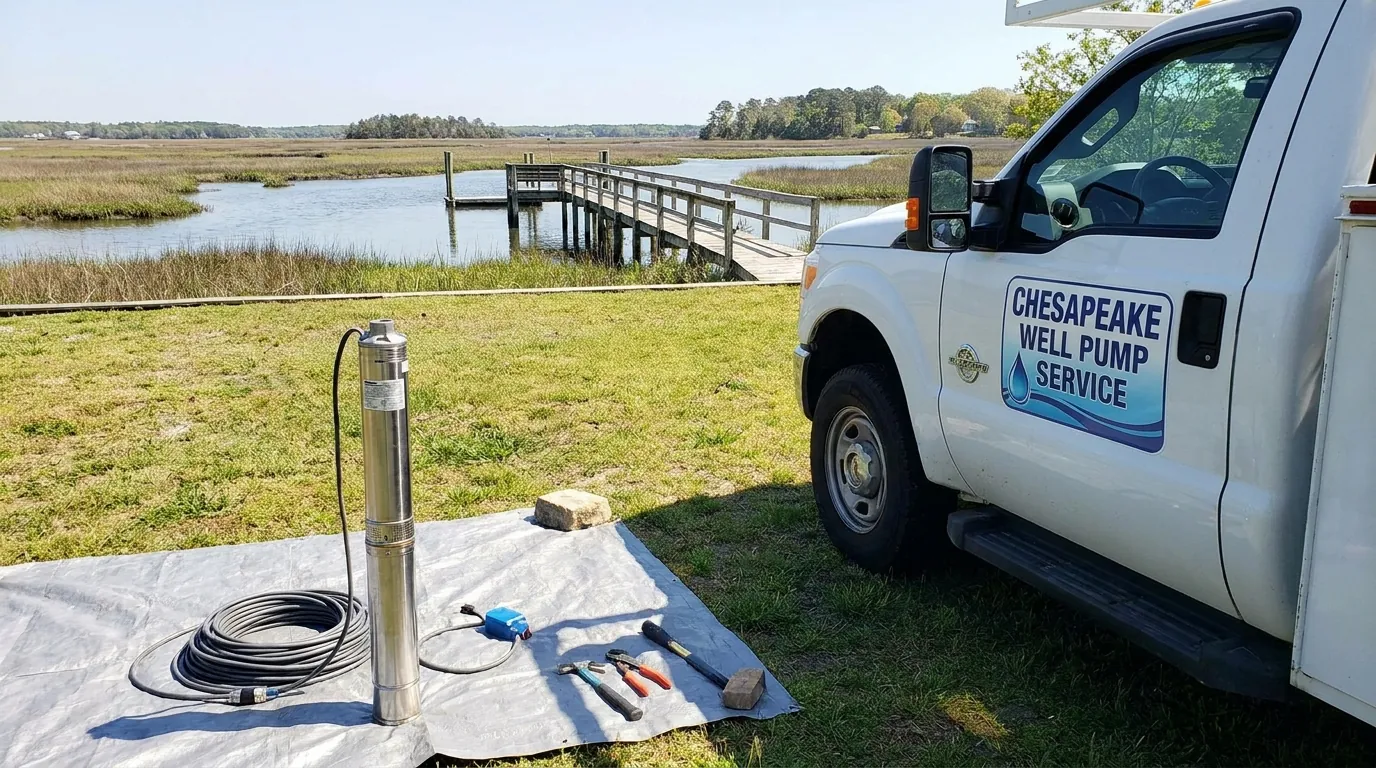
When replacement is the right call
Not every pump problem can be repaired, and chasing failing parts on a worn-out pump wastes money. A pump that has lost its motor, a submersible unit with failed windings, or a pump that has simply run its service life is a candidate for replacement rather than another patch. The decision usually comes down to the age of the pump, how often it has needed attention, and whether the fault is downhole where parts and labor get costly.
Replacement is also the moment to correct earlier mistakes. Many Chesapeake wells have a pump that was undersized for the home, set at the wrong depth, or chosen without regard for the water's mineral content. A thoughtful replacement sizes the new pump to the well's actual yield and depth, the home's fixture count, and the pressure the household expects — not just whatever matched the old one.
If you're not yet sure the pump is finished, start with well pump repair or a well inspection to confirm the diagnosis before committing to a new unit.
What a replacement involves
Replacing a well pump is a methodical job, especially for a submersible set deep in a cased well:
-
Confirm the failure and well details
We verify the pump has truly failed, then gather the well depth, casing size, static water level, and the home's demand. These numbers drive the sizing — a replacement guessed from the old nameplate alone often repeats old problems.
-
Pull the existing pump
For a submersible, the drop pipe, wire, and safety rope are drawn up from the well. We inspect what comes out — scale, corrosion, and wear on the old unit tell us a lot about the water and how the next pump should be specified.
-
Select the correct pump
We match flow rate, head pressure, horsepower, and material to the well and household. Mineral-heavy water favors certain pump and check-valve choices that resist scaling and sediment wear.
-
Install and set depth
The new pump is set at the proper depth above the well bottom with new drop pipe, wire, and a torque arrestor as needed, then the wellhead and electrical are reconnected with waterproof splices.
-
Test and set pressure
We prime, check amp draw, set the pressure switch and tank charge, and confirm steady pressure at the fixtures before leaving the system in service.
How local water and soil shape the choice
Chesapeake's geology drives sizing decisions directly. Well depth, water-table level, and mineral content vary across the area, and all three change how a replacement should be specified. A shallower well tapping a high water table needs a different pump than a deeper bored well, and both perform differently when the water carries the iron and sediment common in local red-clay ground.
That mineral content is the quiet killer of pumps here. Iron and fine grit abrade impellers and clog check valves over time, so a replacement that ignores water quality will wear out early. Choosing corrosion-resistant materials and the right check-valve setup at replacement time is one of the better ways to get a long service life out of the new unit.
A new pump also deserves a healthy pressure tank behind it. If the tank is old or waterlogged, pairing the replacement with pressure tank service protects the new motor from the short-cycling that shortens pump life.
Thinking about a new pump?
Tell us about your well and what the water's been doing, and we'll walk through whether replacement is warranted and how a new pump would be sized.
Serving Chesapeake and the surrounding Hampton Roads area.
Frequently asked questions
How long does a well pump last in this area?
It varies with pump type, how hard it runs, and water quality. Mineral and iron content in local water can shorten the life of a pump that would run longer in cleaner water, which is why sizing and material choice at replacement matter so much.
Can I just put in the same pump that was there before?
Sometimes, but it's worth checking first. Many wells had an undersized or poorly matched pump to begin with. We size the replacement to the well's depth and yield and the home's demand, which often means a better-suited unit than the original.
How long does a replacement take?
A straightforward above-ground or shallow pump swap can be done in a few hours. A deep submersible replacement takes longer because the drop pipe and wire must be pulled and reset, but most residential jobs are completed in a day.
Should the pressure tank be replaced at the same time?
Not always, but it's the right time to check it. An aging or waterlogged tank makes a new pump cycle too often and wear early, so we test the tank during a replacement and recommend service only if it's needed.