Pressure Tank Service in Chesapeake
Pressure tank service in Chesapeake, VA: fixing waterlogged tanks, short-cycling, and lost air charge to protect your well pump and steady your water.
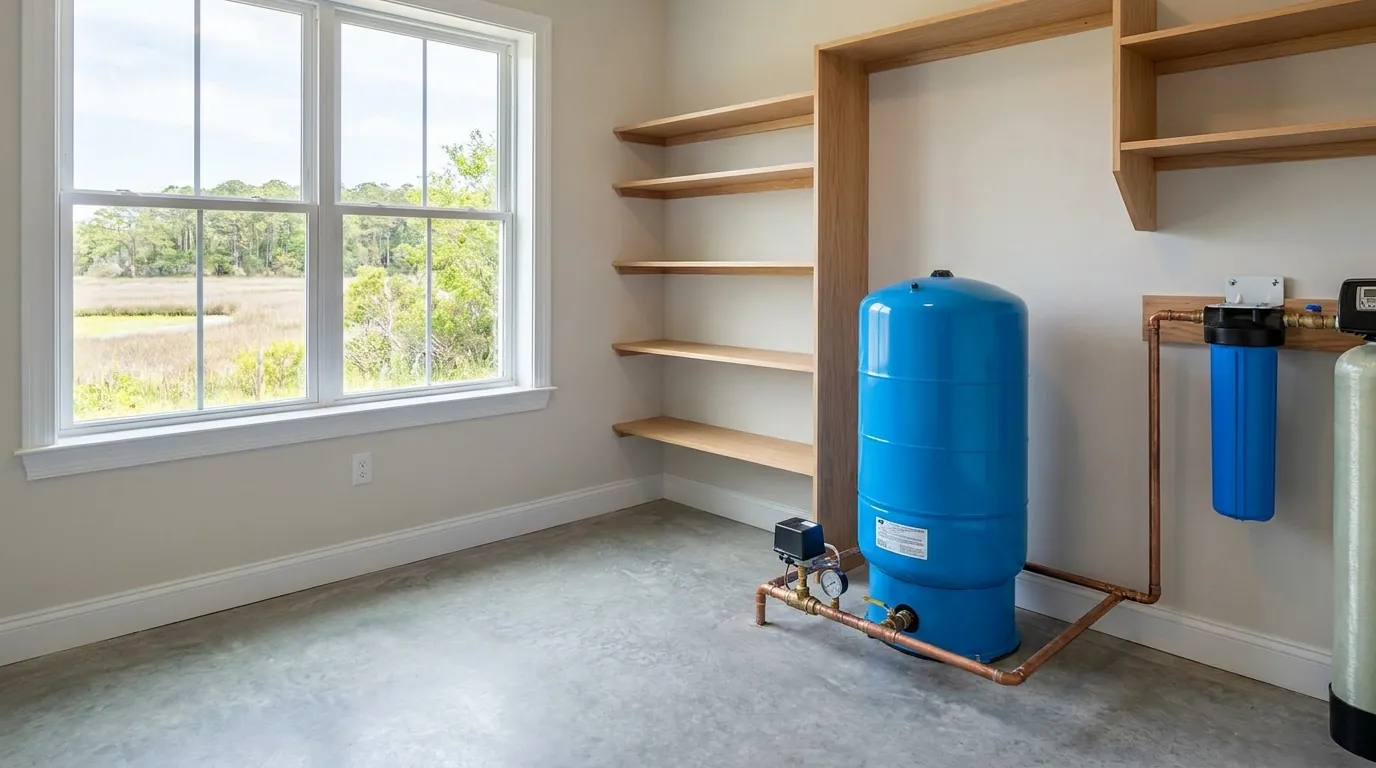
What the pressure tank does — and how it fails
The pressure tank is the unsung part of a well system. It stores water under pressure so your pump isn't forced to start every time you open a tap, and it smooths out the pressure you feel at the fixtures. When the tank fails, the pump pays for it: it starts and stops far too often, wearing the motor and running up the electric bill.
The usual culprit is a lost air charge or a ruptured bladder. A tank that has gone waterlogged can no longer cushion the system, so the pump short-cycles — kicking on and off every few seconds when you run water. Other signs include pressure that surges and drops at the tap, a tank that feels completely full and heavy when you rock it, or water spitting from faucets. Any of these is worth checking before the constant cycling damages the pump.
Because short-cycling is so often blamed on the pump, a tank check is one of the first things we do during well pump repair and low water pressure diagnosis.
What pressure tank service covers
Service ranges from a simple recharge to a full tank replacement, depending on what we find:
-
Check the air charge
We shut off the pump, drain the system, and measure the tank's air pre-charge against the pressure switch's cut-in setting. A charge that has leaked off is a common, inexpensive fix on a tank that's otherwise sound.
-
Test the bladder
We check whether the bladder is intact. A ruptured bladder lets water fill the whole tank and can't be recharged — that tank needs replacement rather than service.
-
Verify the pressure switch
The switch and the tank work as a pair. We confirm the cut-in and cut-out pressures match the tank and the home's needs, and replace a pitted or sticking switch when found.
-
Recharge or replace
Where the tank is good, we set the pre-charge correctly and return it to service. Where the bladder has failed or corrosion has set in, we fit a properly sized replacement tank.
Local conditions and tank life
Chesapeake's mineral-rich well water leaves its mark on pressure tanks. Iron and sediment settle inside over time, and that buildup can foul the air-to-water boundary and shorten the life of the bladder. Tanks in homes with heavy iron water tend to need attention sooner, which is why we look at the tank's interior condition and not just its pressure reading.
The region's humid summers and wet winters also work on the steel shell and the fittings. Condensation and standing moisture around a tank in a damp basement or crawlspace encourage external corrosion at the base and the air valve. Keeping the connections dry and the pre-charge correct is simple maintenance that noticeably extends tank life here.
If your tank is failing alongside an aging pump, it's worth considering the two together — a fresh tank behind a tired pump, or vice versa, often just moves the next problem down the road. See well pump replacement if the pump is near its end as well.
Pump cycling too often?
Rapid cycling usually traces back to the pressure tank. Tell us what you're hearing and we'll help you sort out whether it needs a recharge or a replacement.
Serving Chesapeake and nearby Hampton Roads communities.
Frequently asked questions
What does a waterlogged pressure tank mean?
It means the tank has lost its air cushion — usually from a leaked air charge or a ruptured bladder — so water fills the space that should hold pressurized air. The result is a pump that short-cycles and wears quickly. A leaked charge can often be reset; a ruptured bladder means the tank needs replacing.
How do I know if it's the tank or the pump?
Rapid on-off cycling when running water points strongly to the tank. A pump that won't build pressure at all, or won't start, points elsewhere. We test the tank's air charge and the pressure switch first because they're the common, low-cost causes.
Can a bad pressure tank damage my pump?
Yes. A failed tank forces the pump to start far more often than it was designed to, and that constant starting wears the motor and controls prematurely. Fixing the tank promptly protects the far more expensive pump.
How long do pressure tanks last?
Many run well over a decade, but local iron and sediment content can shorten that. We judge each tank on its air charge, bladder condition, and corrosion rather than age alone before recommending service or replacement.