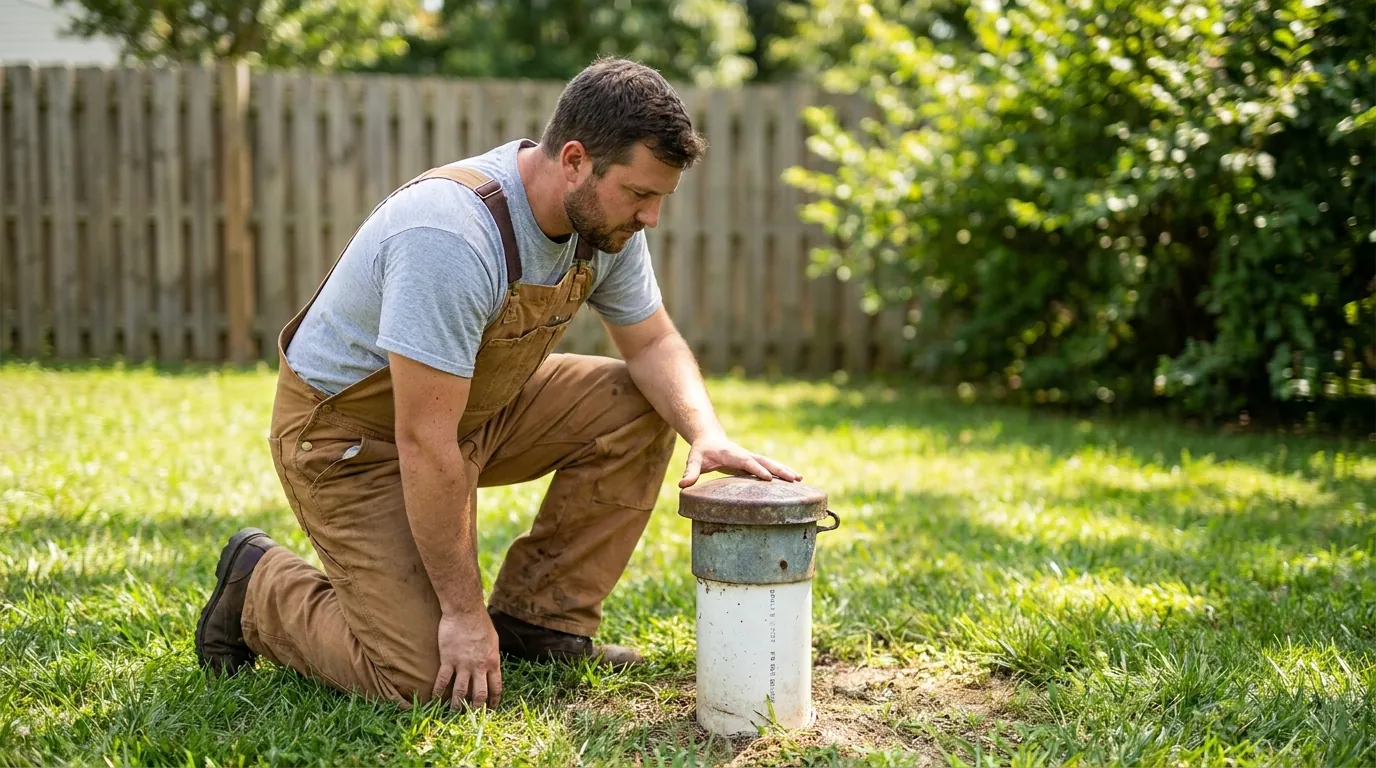
Wellhead and cap
We check the cap, seal, and casing above grade for damage or openings that could let surface water, insects, or debris into the well — a real concern on low-lying, flood-prone ground.
Well inspection in Chesapeake, VA for home buyers and owners: pump performance, pressure, water flow, and system condition before problems surface.
A well inspection is a planned look at a system that most homeowners never see. The pump sits out of sight, the tank hides in a basement or utility room, and the wellhead is often tucked at the edge of the yard. An inspection brings the whole system into view — how well the pump performs, whether pressure holds, how much water the well delivers, and what condition the components are in.
People ask for an inspection at a few key moments: before buying a home on a private well, after moving in, when water quality or pressure has changed, or when a pump is getting old and they want a sense of how much life is left. Homeowners searching for well drilling near me are often really looking for an honest assessment of an existing well before they decide whether anything needs to be drilled, repaired, or replaced at all.
An inspection is also the right first step when symptoms are vague. If pressure or flow is off but nothing has clearly failed, pairing the inspection with low water pressure diagnosis usually finds the cause.
A thorough well inspection looks at the whole system, not just the pump:
We check the cap, seal, and casing above grade for damage or openings that could let surface water, insects, or debris into the well — a real concern on low-lying, flood-prone ground.
We measure how the pump builds and holds pressure, check amp draw where accessible, and watch for signs of a struggling motor or a pump cycling more than it should.
We assess how much water the system delivers and how it holds up under sustained draw, which hints at the well's yield and whether the pump is keeping pace with demand.
We test the tank's air charge and the pressure switch settings, since a weak tank is a leading cause of symptoms that get blamed on the pump.
We examine accessible wiring, splices, check valves, and plumbing for corrosion, leaks, and connections degraded by the area's damp conditions.
We note visible iron staining, sediment, cloudiness, or odor — common in local water and useful clues to how the system has been working and what it may need.
An inspection in Chesapeake tells a particular story. The high water table and red clay soils mean many wells here are shallower and more exposed to surface influence than wells in rockier parts of the state. We pay close attention to the wellhead seal and casing on properties that sit low, because wet winters and heavy summer storms can push surface water toward a poorly sealed cap.
Water chemistry is the other theme. The iron and mineral content common in local groundwater leaves staining and sediment that tell us how the pump and tank have been coping. Those observations feed directly into any advice about whether the current setup is well matched to the well — the same well depth, water-table, and mineral factors that drive how a replacement should be sized. If an inspection turns up a pump near the end of its life, we can explain options for well pump replacement rather than leaving you guessing.
If you've been comparing well drilling rates or weighing whether to drill at all, an inspection first often answers the question — many systems need service, not a new well.
Whether you're buying a home or just want to know where your system stands, tell us about the property and we'll explain what an inspection would cover.
Serving Chesapeake and surrounding Hampton Roads towns.
The most common times are before buying a home on a private well, when water pressure or quality changes, or when the pump is aging and you want to plan ahead. An inspection before any major decision usually saves money by distinguishing a service need from a replacement need.
An inspection documents visible water characteristics like iron staining, sediment, and odor, and we can advise on laboratory water testing where it's warranted. The visible observations alone often point to whether treatment or further testing is worth pursuing.
It gives a well-informed picture rather than an exact date. By measuring pressure performance, cycling behavior, amp draw, and the condition of components, we can tell you whether a pump is healthy, declining, or close to replacement.
Usually, yes. Many problems people assume require a new well turn out to be a failing pump, tank, or wellhead issue that service can fix. An inspection first keeps you from paying for drilling you may not need.