Well Pump Installation in Chesapeake, VA
Well pump installation and replacement in Chesapeake, VA. Correctly sized pumps, tanks, and controls built to handle local conditions.
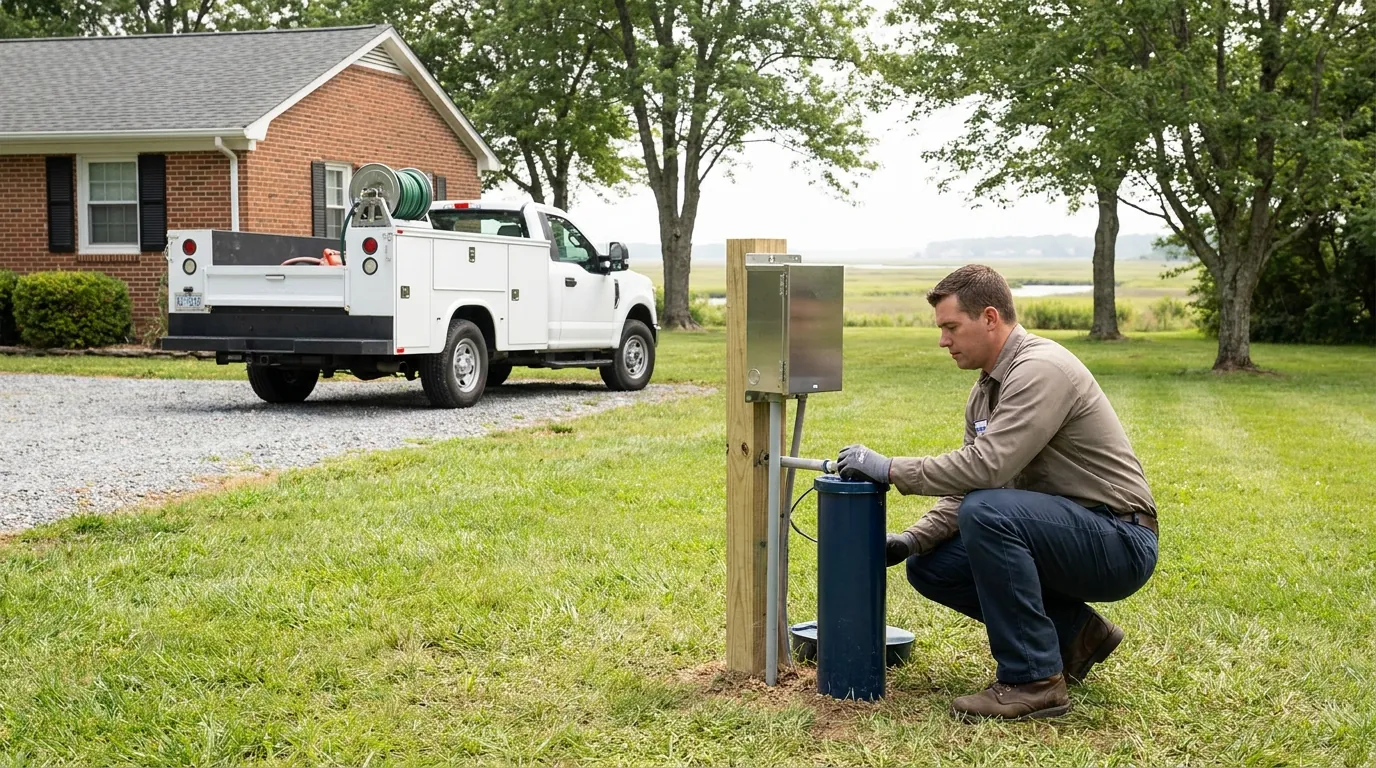
When it's time to replace a well pump
Well pumps do not last forever. Most reach the end of their working life somewhere in the range of a decade or so, sooner if the water carries sediment or the pump has been running hard against a waterlogged tank for years. When a pump has worn out — the motor is failing, pressure has never quite recovered, or it has needed repair after repair — replacing it is usually the better use of your money than another patch.
New installations also come up when a home's water demand has grown, when an older undersized pump can't keep up, or when a well has just been drilled or reworked. Whatever the reason, the goal is the same: a pump matched to the well and the household, installed so it runs balanced and lasts. If you are not sure whether you have reached this point, an honest well pump repair diagnosis will tell you whether the current pump has life left in it.
Getting sizing and setup right is the whole game. An oversized pump short-cycles and wears out; an undersized one runs constantly and never satisfies demand. Both problems are avoidable, and both are common when a pump is swapped without thinking about the well behind it — which is exactly why installation deserves the same care as any other part of what well pump work involves.
What a well pump installation involves
A proper installation is a sequence, not a single part swap.
-
Assess the well and the demand
We look at the well's depth, static water level, and recovery, plus how many fixtures and people the system serves. Chesapeake's shifting water table matters here — a pump has to keep working when levels drop in drier stretches, not just when the well is full.
-
Select and size the pump
We match pump type — usually a submersible for deeper wells, a jet pump for shallow ones — to the well and the household's peak flow needs. Correct sizing is the single biggest factor in how long the new pump lasts and how well the home performs.
-
Install pump, tank, and controls together
A new pump works best with a properly matched pressure tank, pressure switch, and clean, corrosion-resistant electrical connections. Given the coastal humidity here, we pay close attention to sealing and protecting connections so they hold up over time.
-
Set pressure and verify performance
We set cut-in and cut-out pressures, charge the tank to match, and test the full system — flow, cycling, and amp draw — so it runs balanced from day one. A system set up correctly cycles less and lasts longer.
How local conditions shape a new installation
The water table around Chesapeake and neighboring communities such as Virginia Beach and Suffolk rises and falls with rainfall and the seasons. A pump chosen only for how the well looks in a wet spring can fall short when levels drop later in the year, so we size for the well's behavior across the seasons, not a single day's reading. That margin is what keeps water flowing in a dry stretch.
The region's damp climate also drives the way we handle the parts that live above ground. Humidity and wet winters corrode switches, control boxes, and connections, so we protect and seal the electrical side carefully during installation — the small details that keep a new system from developing the same faults that killed the old one. And where clay-borne sediment is a factor, we account for it in the pump and screen choices so grit does not chew through a brand-new pump. Once a system is in, occasional well pump service keeps it dialed in for the long haul.
Plan your well pump installation
Whether your pump has failed, is on its way out, or you are outfitting a new or reworked well, tell us about your system and we will help you plan a pump sized and installed for how your well actually behaves.
Call to discuss a well pump installation anywhere in Chesapeake and the surrounding area.
Frequently asked questions
How long should a new well pump last?
With correct sizing and setup, many pumps run well past a decade. Lifespan depends heavily on water conditions, how well the pressure tank is maintained, and whether the pump is matched to the well — all things a careful installation gets right from the start.
Submersible or jet pump — which do I need?
It depends mostly on well depth. Deeper wells typically use a submersible pump set down in the water, while shallow wells can use a jet pump at the surface. We base the choice on your well's depth, water level, and demand rather than a one-size-fits-all rule.
Do I really need a new pressure tank too?
Not always, but often. An old or waterlogged tank makes a new pump short-cycle and shortens its life, so we check the tank's condition. Matching the tank to the new pump protects your investment.
What affects the cost of an installation?
The main drivers are well depth, pump type and size, whether the pressure tank and controls also need replacing, and the condition of the existing wiring. We explain what your specific well requires before any work begins.